Chain Built to Lift Heavier Without Added Bulk
Alloy Chain Slings in Pasco for Heavy Industrial Lifting Operations and Custom Rigging Configurations
Columbia Rigging Corporation fabricates alloy chain slings on-site in Pasco, proof load testing and certifying every assembly before it reaches industrial job sites across the Tri-Cities region. You need these assemblies when cranes, hoists, and material handling systems require reliable connections between lifting equipment and loads measured in thousands of pounds. Each sling is built with either Grade 80 or Grade 100 alloy chain, and the difference matters—Grade 100 delivers roughly 25 percent more lifting capacity than Grade 80 without increasing chain diameter or overall sling weight.
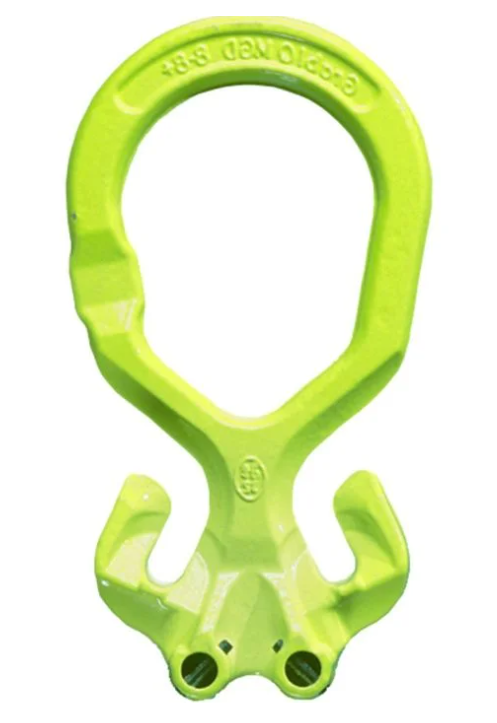
The fabrication process includes integrating shortening pockets into each leg, reducing the need for additional fittings and simplifying rigging adjustments in the field. Distinctive chain colors identify grade and capacity at a glance, which helps crews verify safe working loads without consulting tags under difficult job site conditions. These assemblies handle the demands of heavy construction, fabrication shops, transportation projects, and industrial lifting operations where equipment must perform consistently under load.
Request custom sling configurations and lifting capacity recommendations based on your specific rigging requirements.
How Alloy Chain Slings Handle Repeated Load Cycles
Alloy chain construction resists elongation and deformation under tension, maintaining dimensional stability across thousands of lift cycles. Columbia Rigging Corporation applies proof load testing during fabrication, verifying each sling meets rated capacity before certification, so you receive assemblies that have already demonstrated structural integrity under controlled conditions. The reduced fitting design eliminates extra connection points that can introduce weak links or complicate load distribution during multi-point lifts.
After installation, you notice faster rigging setups because the built-in shortening pockets allow length adjustments without swapping hardware or adding choker configurations. The color-coded chain system speeds up capacity verification during pre-lift inspections, and the alloy material tolerates abrasion from steel edges and rough surfaces better than synthetic alternatives. Grade 100 options become necessary when existing rigging reaches its working load limit and you need increased capacity without moving to larger, heavier chain sizes that complicate handling.
The slings include documentation that records proof test results, chain grade, rated capacity, and certification dates. This traceability matters during safety audits and helps you maintain compliance with OSHA and ASME rigging standards. Alloy chain slings outlast synthetic options in environments where sharp edges, high temperatures, or chemical exposure would degrade textile fibers.





Questions About Alloy Chain Rigging
Industrial lifting operations rely on certified rigging hardware, and understanding how alloy chain assemblies perform helps you select configurations that match your equipment and load profiles.
What does proof load testing verify before a sling leaves the shop?
Each assembly is tensioned to a load exceeding its rated capacity, confirming the chain, fittings, and welds can handle working loads without permanent deformation or failure.
How do shortening pockets improve rigging efficiency?
Built-in pockets let you adjust effective sling length by repositioning the master link, eliminating the need for additional hardware and reducing setup time during multi-point lifts.
Why does Grade 100 chain cost more than Grade 80?
Grade 100 alloy undergoes additional heat treatment and metallurgical processing, resulting in approximately 25 percent higher tensile strength per chain diameter, which allows lighter rigging for equivalent lifting capacity.
When should you replace alloy chain slings in active service?
Replace slings when you observe chain elongation exceeding three percent of original length, visible cracks in links or fittings, excessive wear reducing link diameter, or any deformation that alters chain geometry.
What industrial applications in Pasco require Grade 100 capacity?
Heavy fabrication shops, construction crane operations, and transportation projects involving oversized loads benefit from the increased capacity when space or weight constraints prevent using larger Grade 80 assemblies.
Columbia Rigging Corporation maintains inventory of Grade 80 and Grade 100 chain components, allowing same-day fabrication for standard configurations and quick turnaround on custom assemblies. Contact the Pasco location to specify your lifting requirements, load weights, and rigging geometry for fabricated and certified chain sling solutions.