Cable Engineered for Tension and Flexibility
Wire Rope in Pasco for Crane Systems and Industrial Equipment Applications
Rotation-resistant wire rope prevents the twisting that standard ropes experience under load, which matters when hoisting materials with cranes where load rotation creates hazards or damages lifted objects. Columbia Rigging Corporation supplies standard wire rope, rotation-resistant configurations, and galvanized aircraft cable in Pasco, offering bright finish, galvanized, stainless steel, and vinyl-coated options depending on environmental exposure and equipment requirements. These products support crane operations, lifting systems, towing applications, and industrial equipment in commercial, marine, and transportation environments.
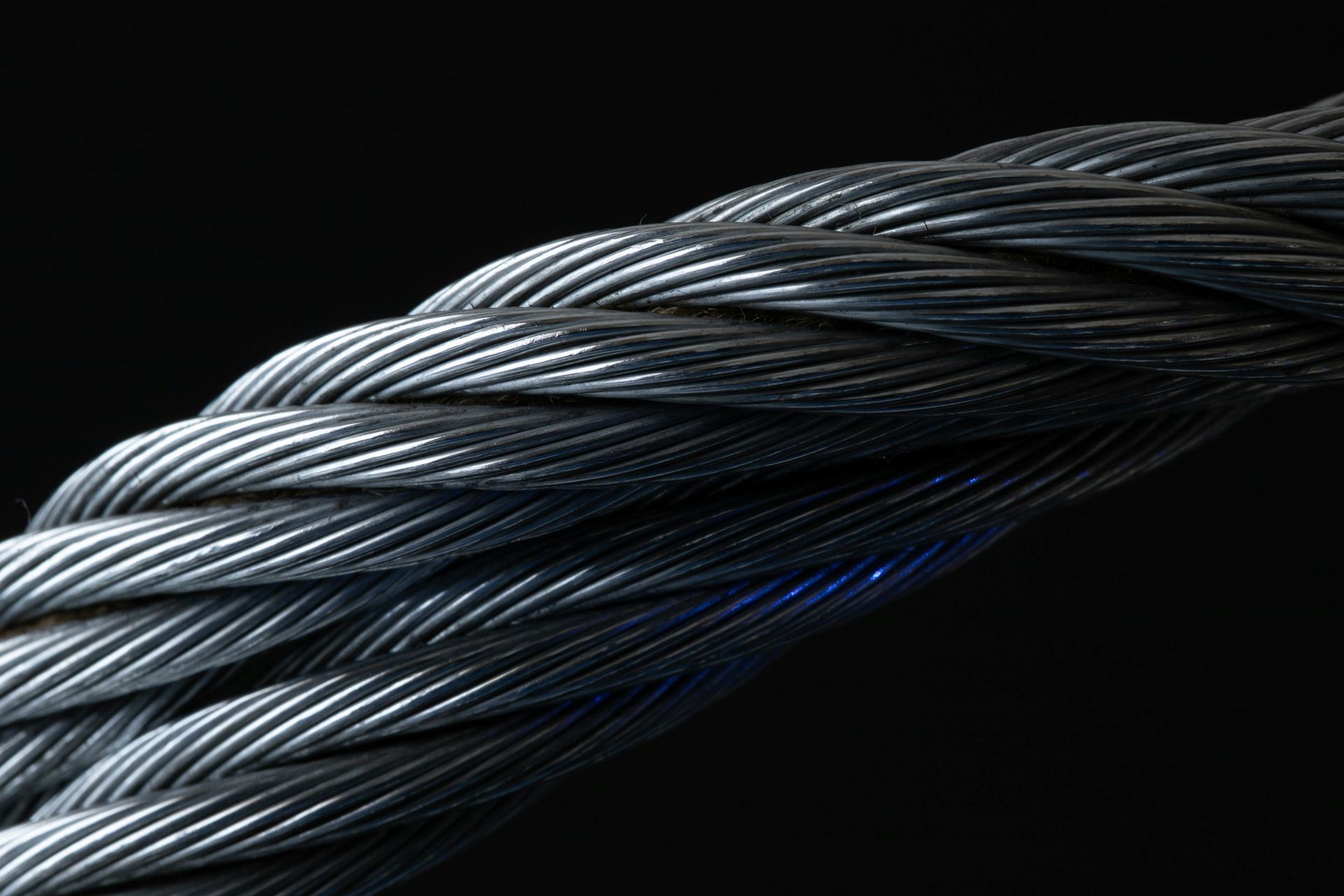
Wire rope construction involves multiple wire strands wound around a core, and the strand configuration determines flexibility, abrasion resistance, and load capacity. Rotation-resistant designs use opposing lay directions in inner and outer layers to balance torque under tension, preventing the spinning that occurs with conventional ropes when lifting unrestrained loads. Galvanized coatings protect against corrosion in outdoor and marine applications, while vinyl coatings add abrasion resistance and reduce marking on surfaces that the rope contacts.
Request wire rope specifications and availability based on your equipment sheave diameter, load requirements, and environmental conditions.
What Differentiates Rotation-Resistant from Standard Rope
Standard wire rope constructions with all strands laid in the same direction accumulate torque under tension, causing the rope and its load to rotate unless mechanically restrained. Rotation-resistant designs balance internal torque by using opposite lay directions in different strand layers, which prevents rotation but reduces rope flexibility and requires larger sheave diameters to avoid fatigue damage. You select rotation-resistant rope when operating cranes without load-rotation control or lifting objects that become hazardous if allowed to spin, such as personnel baskets, precast panels, or loads positioned near structures.
After installing rotation-resistant wire rope on crane systems, you notice loads remain oriented during hoisting without requiring tag lines or mechanical restraints, improving positioning accuracy and reducing ground crew workload. Stainless steel rope maintains strength in corrosive environments where galvanized coatings would fail, making it suitable for marine applications and chemical processing facilities. Vinyl-coated rope protects architectural finishes and painted surfaces from wire strand abrasion during material handling operations.
Wire rope inventory includes multiple diameters and strength ratings, accommodating different sheave sizes and working load limits across crane models and industrial equipment. Regular inspection focuses on broken wires, strand displacement, diameter reduction from wear, and corrosion that weakens individual wires before affecting overall rope strength.
Wire Rope Application Questions
Selecting appropriate wire rope requires matching construction type, material, and diameter to your equipment specifications and the environmental factors that affect rope service life.
What causes standard wire rope to rotate under load?
Torque builds up in ropes where all strands are wound in the same direction, and this torsional stress causes the rope and attached load to spin when tension is applied without rotational restraint.
How does galvanized coating protect wire rope in Pasco's climate?
Zinc galvanizing creates a sacrificial barrier that corrodes before the underlying steel, extending rope life in outdoor applications exposed to moisture, temperature fluctuations, and seasonal weather conditions common in the Tri-Cities region.
When should you choose stainless steel over galvanized rope?
Stainless steel resists corrosion in marine environments, chemical processing facilities, and food-grade applications where galvanized coatings would flake or contaminate products.
Why does rotation-resistant rope require larger sheave diameters?
The opposing lay construction reduces flexibility, increasing bending stress when rope passes over small-diameter sheaves, which accelerates fatigue damage and shortens service life.
What diameter and strength options accommodate crane operations?
Columbia Rigging Corporation stocks wire rope in diameters from small-gauge aircraft cable to heavy crane rope, with strength ratings matched to equipment working load limits and sheave groove dimensions.
Columbia Rigging Corporation supplies wire rope for crane systems, towing equipment, and industrial machinery, with inventory covering standard and specialized constructions. Contact the Pasco facility to specify your equipment requirements, operating environment, and load capacities for wire rope recommendations and availability.